Why Eco Tourism is the Future of the Sundarbans
The Sundarbans is not only a tourist attraction site, but one of the most sensitive and precious ecosystems in the world. The dwelling of the royal Bengal Tiger, the rare mangrove forest, and a special system of tidal rivers need protection as much as they deserve appreciation. Sundarban eco tourism is taking the form of the most responsible and meaningful means of visiting this magnificent land, as more and more travellers become aware of their effects on nature.
Eco-tourism at Sundarbans is not about luxury but about balance. It is a natural experience, and at the same time, it makes sure that nature will live and prosper in the coming generations.
Learning about the Fragile Ecosystem of the Sundarbans
Sundarbans is part of one of the most sensitive areas physically in the world. Tourism in this case should be done with care, consciousness, and accountability.
It is here that eco-tourism comes in very handy to preserve that which makes the Sundarbans so special, and at the same time enables people to take in the magic.
Why is the Sundarbans ecologically unique?
Sundarbans is the largest mangrove forest in the world and a UNESCO World Heritage. It is a relatively unique ecosystem where land and sea continuously rebuild each other through rivers and tides.
It is home to the Royal Bengal Tiger, estuarine crocodiles, spotted deer, and hundreds of species of birds.
Mangrove forests serve as a natural fence against cyclones and erosion of the coast. Thousands of local families in the region rely on forests and rivers to live.
Due to such a delicate balance, tourism can result in long-term harm when uncontrolled. This is why Sundarban eco tourism is not a fashion; it is a must.
Why Traditional Tourism May Be Damaging?
Conservation is not usually considered in the traditional mass tourism that usually only puts emphasis on comfort and volume.
- It enhances pollution and plastic waste in rivers and forests.
- It disrupts wild animals by making a ruckus, overcrowding, and irresponsible safaris.
- It strains the local resources such as water, fuel, and land.
Eco-tourism will be a resolution to this as it lessens damage and raises awareness.
What Eco-Tourism Really Means in the Sundarbans?
Eco-tourism does not mean simply being in the proximity of nature; it is a lifestyle, a way to be in balance with it, even for several days. The philosophy has influenced a novel form of travelling in the Sundarbans that honours the environment and the local culture.
High-Experience, Low-Impact Travel
- The main principle of eco-tourism is straightforward: remember, leave footprints.
- Utilisation of the non-polluting boats and regulated safari trails.
- Small tourists per trip so as not to crowd.
- Small consumption of plastics and non-biodegradable substances.
- Buildings made to harmonise with nature rather than to look like it.
This explains the reason why several travellers nowadays would choose to live in an eco village resort as opposed to a regular hotel.
Education By Experience
Learning is also a part of eco-tourism in the Sundarbans.
- Learning about the protection of the mangrove forests on the coasts.
- Knowledge of the folklore, forest traditions, and survival stories in the area.
- Watching nature instead of running behind its animals to take photographs.
- These experiences generate a more emotional attachment towards nature.
The Sundarbans: Rise of Eco Village Stays
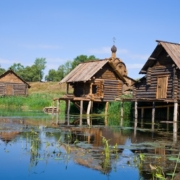
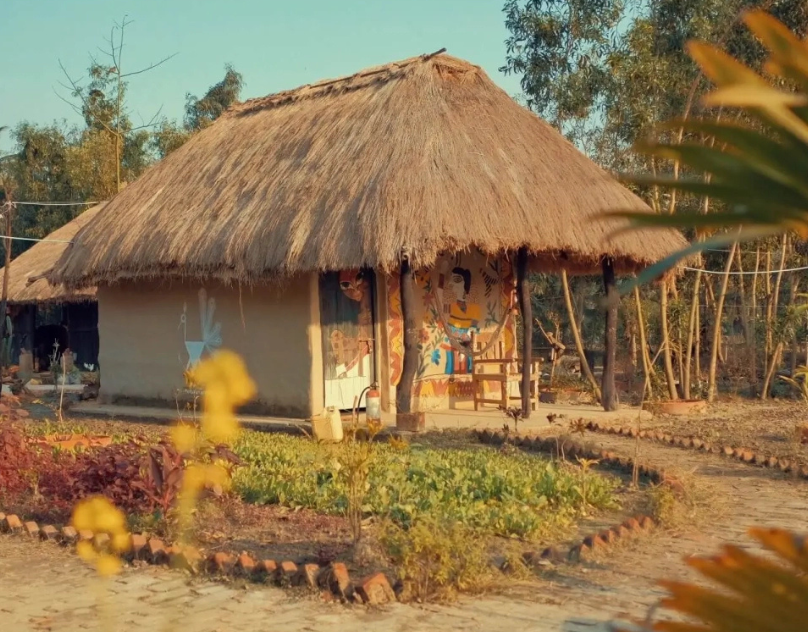
A significant role in the sustainability of a trip is played by accommodation. Eco-stays in Sundarbans are changing the concept of comfort. Travellers prefer places that are integrated with nature instead of concrete buildings.
What is an Eco Village Resort?
An eco village resort is supposed to co-exist with nature and not fight against it.
- Constructed with mud, clay, and natural materials.
- Naturally ventilated and with sun.
- Utilises local resources and local labour force.
- Generates significantly low waste and carbon footprint.
These lodgings are serene, quiet, and provide a strong feeling of belonging to the environment.
Nature Without Having to Do Without Comfort
The idea of eco-stays being assumed by many people is that they are synonymous with discomfort. In an actual sense, contemporary Sundarbans Eco Resort ideas are amalgamated:
- Clean and comfortable rooms
- Hygienic foodstuff produced using local products.
- Consider architecture that is home-made.
- The calm environment that cannot be provided by hotels in the city.
What is considered luxurious here is not marble floors but bird and river and forest air in the waking.
Responsible Wildlife Tourism: A New Experience
The Sundarbans is all about wildlife, and it should never be overridden by human entertainment. Eco-tourism also makes sure that there is no exploration without exploitation.
Jungles and River Cruises in Ethics
Green safaris are concerned with:
- Strict adherence to the forest department rules
- Keeping noise levels low
- Feeding and disturbing animals never
- Keeping a distance from animals
It is not interference but observation.
Night Life and Interpretation of Nature
Examples of some eco-tourism experiences are:
- Sound-oriented and not spotting night safaris
- Bio-glow and star-gazing on rivers
- Storytelling of forest life and local legends.
These events make people respect the forest instead of making it more of a spectacle.
The Role of Eco-Tourism in Enriching the Local Communities
Sundarban eco tourism has one of the most potent elements in that it brings happiness to the people who are the real residents. Tourism does not only have to make the visitors happy, but also enhance the lives of the locals.
Work and Level of Skill
Eco-tourism creates jobs for:
- Naturalists, guides, and local boatmen
- Local cooks, performers, and artisans
- Traditional skills of construction workers
This minimises reliance on vices such as illegal fishing or deforestation.
Saving Culture and Traditions.
Through eco-tourism:
- There is local music, folk tales, and theatre.
- The traditional knowledge is respected and acknowledged.
- The generation of the youths is proud of the past.
Tourism is a means of culture conservation rather than cultural erosion.
Why the Sundarbans’ Future is in Eco-Tourism
The Sundarbans have already been endangered by climate change, an increasing sea level, and human pressure. It is only the sustainable tourism model that can make sure that this region survives.
Conserving the Environment and Raising Awareness
Eco-tourism helps by:
- Investing in conservation
- Building awareness among visitors
- Lessening environmental degradation with regulated traveling
Each responsible tourist is a spokesperson for the forest.
A Model for the Rest of India
Sundarbans can be turned into a bright example of how tourism and conservation can go hand in hand.
The fact that all Sundarbans Eco Resort and eco villages are thriving proves that people are willing to make meaningful travel decisions as opposed to mindless tourism.