
Bamboo, Mud & Magic: Sustainable Living in Sundarbans Eco Villages
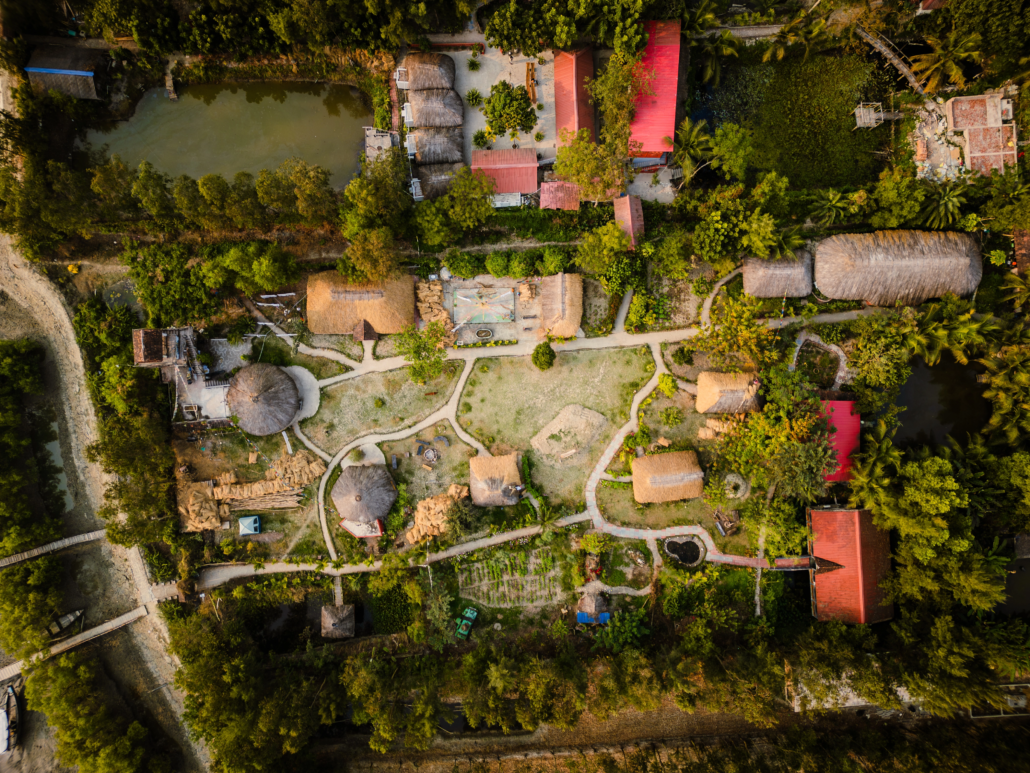
The Sundarbans is fragile, beautiful, and highly dependent on careful travel. UNESCO notes that it supports biodiversity, local livelihoods, and protection from storms. An eco village stay near Kolkata gives you comfort without losing the local feel. Tour de Sundarbans uses earth, bamboo, hay, and mud-inspired design. Eco tourism in Sundarban works best when it supports local people, uses low-impact stays, and respects the forest’s carrying limits.
Introduction
According to UNESCO, the Sundarbans is one of the world’s largest mangrove areas. It also supports biodiversity and protects people from cyclones and tidal surges. A 2024 study on the Indian Sundarbans found that mangrove ecosystem services are central to local livelihoods, with fishing and crab collection among the most common activities.
That is why travel here needs more care than a normal holiday. Visitors want comfort, but the landscape cannot absorb careless tourism. People also want an experience that feels local, peaceful, and meaningful. The challenge is finding a stay that gives all of that without harming the place.
This blog shows how bamboo, mud, and community-led design make that possible. You will learn what an eco village near Kolkata looks like, how eco tourism in Sundarban supports the region, and why Tour de Sundarbans fits travellers who want nature with purpose.
What makes an eco village stay in Sundarbans different from a normal trip?
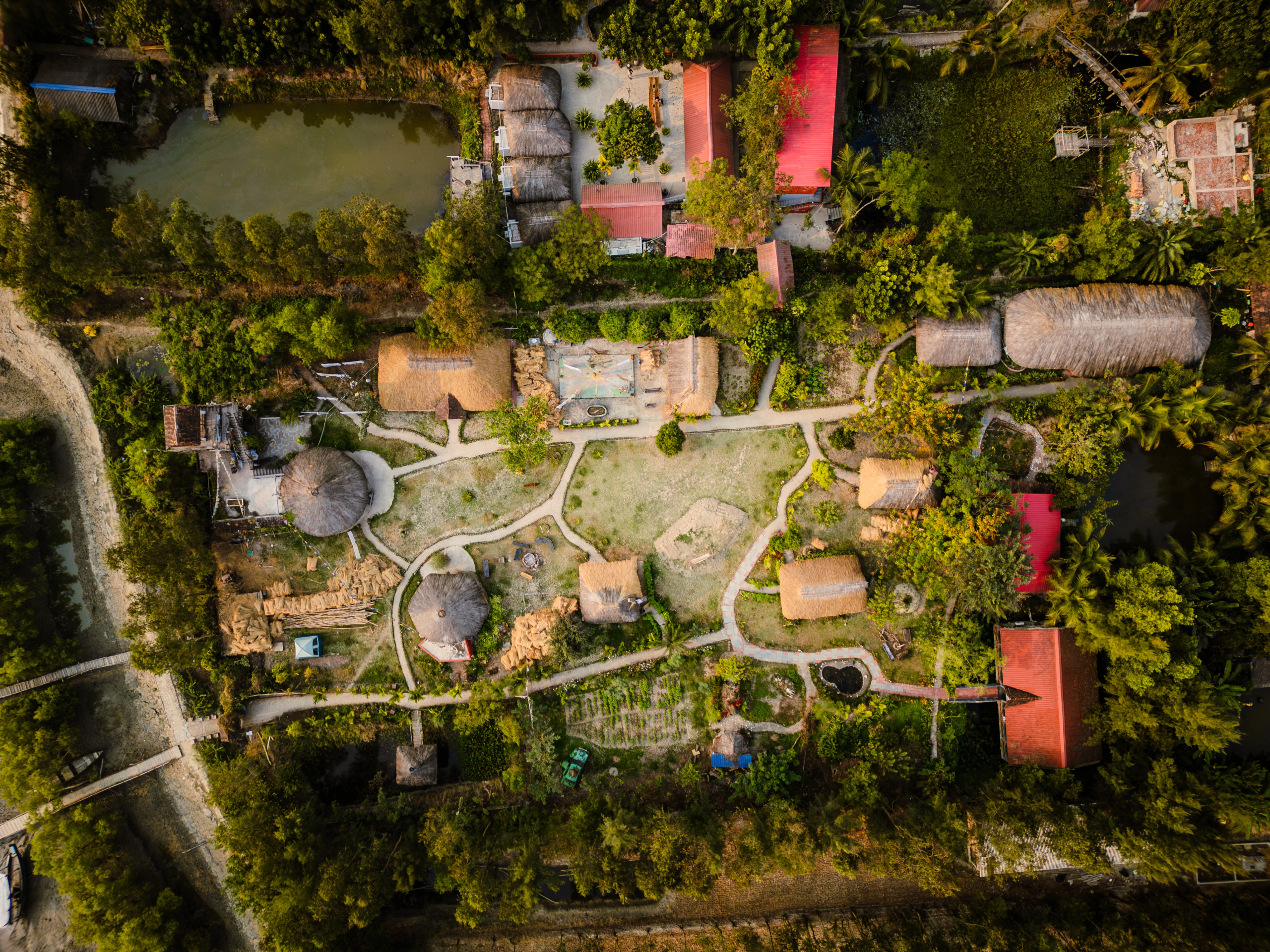
An eco village stay is not just a room near the forest. It is a softer way to travel. The setting is designed around the mangrove landscape, local building methods, and lower-impact living. Tour de Sundarbans describes its eco village as a living space created with the fragile mangrove ecosystem in mind. It uses earth, bamboo, hay, and other local materials, while also using some concrete where weather safety demands it.
That difference matters because the Sundarbans is not an ordinary tourist zone. UNESCO notes that the region is a key habitat for endangered wildlife and an important shelter belt for people living near storms and tidal surges. The area also supports livelihoods for millions. That means tourism should fit the place, not force the place to fit tourism.
A normal trip often focuses only on sightseeing. An eco village stay adds rhythm, culture, and local awareness. You sleep in a setting that feels rooted in the land. You also travel with a lighter footprint. That is what makes the experience memorable.
Eco village living is built for balance
A good eco village gives basic comfort without excess. Tour de Sundarbans lists basic cottages with attached washrooms, running water, western commodes, fans, lights, and charging points. Its deluxe cottages add AC and other comfort features, while still keeping the mud-and-local-material character alive.
That balance is the point. Travellers get a usable stay. The place still feels connected to the mangroves. For many visitors from Kolkata, that is more appealing than a polished resort that could be anywhere.
Why are bamboo, mud, and local materials ideal here?
Bamboo and mud suit the Sundarbans because they match the climate, the landscape, and the cultural mood. They help create a rustic feel that belongs to the region. Tour de Sundarbans says its cottages are built with local material like earth, bamboo, and hay. That gives the property a strong local identity.
These materials also support the idea of low-impact travel. The Sundarbans is ecologically sensitive. UNESCO warns that the site needs a delicate balance to maintain its ecological processes on a sustainable basis. Building and staying in ways that respect that balance is part of responsible tourism.
There is another reason these materials work well. They feel human. They soften the hard edges of travel. A mud cottage beside a mangrove channel feels more honest than an urban-style room dropped into a forest setting. For eco-conscious travellers, that honesty is the luxury.
What bamboo and mud add to the experience
Element | Travel value | Why it matters in Sundarbans |
Bamboo | Lightweight, local, rustic | Fits the region’s natural look |
Mud | Cool, earthy, grounded | Connects the stay to local housing styles |
Hay | Traditional texture | Keeps the setting close to village life |
Local design | Cultural authenticity | Makes the trip feel rooted, not staged |
Tour de Sundarbans also says the eco village was built with local culture in mind. That matters because the Sundarbans is not only a wildlife destination. It is also a living cultural region.
How does eco tourism in Sundarban support local communities?
Eco tourism can support local families when it is designed well. A 2024 study in the Indian Sundarbans found that local people depend heavily on mangrove ecosystem services. It also noted that fishing and crab collection are common, while river transport, freshwater, food, and fibre remain highly important to daily life.
That means tourism should not sit apart from local life. It should strengthen it. When stays use local labour, local food, local boats, and local guides, the value stays in the region. UNESCO also says the Sundarbans provides livelihoods for millions living near the site. That makes community benefit central to responsible travel.
Tour de Sundarbans leans into this idea by offering local cultural evenings and Bono Bibi Pala, a Sundarbans folk performance. It also promotes a true feel of local culture through its activities. That helps visitors engage with the place, not just pass through it.
What community-led eco tourism usually looks like
- Local guides explain the forest and river life.
- Boat rides use local knowledge of tides and channels.
- Meals feature regional flavours.
- Cultural evenings keep stories and folklore alive.
- Village stays create income beyond fishing and farming.
That is the real strength of eco tourism in Sundarban. It does not only sell scenery. It keeps the region’s economy and identity moving together.
What can you do during an eco village trip from Kolkata?
A well-planned eco village trip should feel calm, not crowded. Tour de Sundarbans offers more than just accommodation. It mentions night safaris with glowing phytoplankton, hand-boat sailing through narrow channels, and local musical evenings. Those are the kinds of experiences that make an eco village stay from Kolkata feel different from a standard package tour.
You can also use the trip to slow down. The Sundarbans is not meant for rushed sightseeing. The region is valued for its tidal creeks, islands, mudflats, birdlife, and mangrove landscape. UNESCO describes it as a place of exceptional biodiversity and special natural beauty. That makes observation part of the experience.
For visitors searching “eco village Kolkata”, the appeal is simple. It is close enough for a practical getaway. Yet it feels far from city noise. West Bengal Tourism lists Sundarbans among the state’s top destinations. That reinforces its place as a major short-break choice for Kolkata travellers.
Best-use travel ideas for this kind of stay
Traveller type | Best activity | Why it works |
Families | Cultural evening and boat ride | Easy, relaxed, educational |
Couples | Quiet eco stay and sunset views | Calm and scenic |
Small groups | Shared safari and local food | Social, flexible, memorable |
Nature lovers | Birdwatching and channel cruising | Matches the landscape |
This is also why the trip works so well as a weekend escape from Kolkata. You do not need a loud itinerary. You need the right pace.
How should you plan a responsible Sundarbans eco village trip?
The first rule is simple. Travel with the forest in mind. The Sundarbans is sensitive, and the same location that attracts visitors also supports fragile wildlife and local livelihoods. UNESCO warns that sustainable management is necessary to preserve its values.
The second rule is to time your trip well. Tour de Sundarbans says the best season is generally the cooler months. That is also when outdoor movement feels easier and the trip feels more comfortable. For eco tourism, weather matters because it affects both comfort and movement.
The third rule is to pack and behave responsibly. Keep waste low. Avoid plastic where possible. Respect local guidance. The Sundarbans is not built for careless mass tourism. It needs visitors who understand that the forest is the host.
A simple planning checklist
- Choose a stay that uses local materials and local staff.
- Prefer shorter, better-managed routes over rushed sightseeing.
- Carry only what you need.
- Follow boat and forest rules closely.
- Book with an operator that explains sustainability clearly.
That is the most practical way to keep your trip enjoyable and ethical. It also reduces pressure on the region’s limited infrastructure. UNESCO notes that access and facilities remain challenging in the area.
What should you check before booking with Tour de Sundarbans?
Before you book, compare what the stay actually offers. Tour de Sundarbans gives clear cottage categories. Basic cottages come with essential facilities. Deluxe cottages add AC and more comfort. That helps travellers choose based on need, budget, and travel style.
You should also check how close the experience feels to the local culture. Tour de Sundarbans says it aims to give a true feel of local life through musical evenings and folklore performances. That is useful for travellers who want more than a room and a boat ride.
Another point is scale. The brand says its eco village has expanded over 6 acres. That size matters because it suggests a designed stay experience rather than a random homestay arrangement. It also means the property can separate comfort zones from the raw forest edge.
Quick comparison table
Booking factor | What to look for | Why it matters |
Stay type | Basic or deluxe cottage | Matches budget and comfort |
Materials | Mud, bamboo, earth | Signals eco-minded design |
Activities | Boating, folklore, local culture | Makes the trip richer |
Safety | Clear guidance and managed tours | Important in a tidal region |
Brand fit | Local knowledge and responsibility | Improves trust and experience |
Tour de Sundarbans is a strong fit for travellers who want a more grounded Sundarbans experience. Its eco village concept, cultural emphasis, and nature-first positioning make it especially relevant for “eco village Kolkata” searches.
Why choose Tour de Sundarbans for this experience?
Tour de Sundarbans positions itself around responsible tourism, local culture, and a closer connection to nature. Its eco village is built with the fragile mangrove setting in mind. Its experiences go beyond standard sightseeing. It also offers a blend of comfort and adventure that suits modern travellers from Kolkata and beyond.
That positioning is important because Sundarbans tourism needs trust. A good operator does more than book a room. It helps you move through an ecologically sensitive area with care. It also helps you understand why that care matters. UNESCO and recent research both show how closely the landscape, wildlife, and local livelihoods are tied together.
If your goal is a meaningful eco village stay, Tour de Sundarbans gives you a clear starting point. If your goal is eco tourism in Sundarban, it gives you a practical model. And if your goal is a quieter, better-rooted trip from Kolkata, it gives you exactly that.
FAQs
Is an eco village stay in Sundarbans good for families?
Yes. It suits families who want nature, calm, and culture. Tour de Sundarbans offers basic and deluxe cottages, so comfort can be adjusted easily. The setting is also more relaxed than a busy resort.
What is the best time to visit Sundarbans for eco tourism?
Tour de Sundarbans recommends the cooler months. The weather is easier then, and the trip feels more comfortable. Many travellers prefer this season for boating, wildlife viewing, and a smoother stay.
Does eco tourism really help local people in Sundarbans?
Yes. Recent research shows local communities depend heavily on mangrove ecosystem services. Tourism can add income when it supports local guides, boats, food, and culture rather than extracting value from the region.
What makes Tour de Sundarbans different?
Its eco village is built with local materials and a mangrove-first mindset. It also offers cultural evenings, folklore performances, and special nature experiences like phytoplankton night safaris. That creates a more rooted trip.
Is the Sundarbans only about tiger safaris?
No. UNESCO describes the Sundarbans as a vast mangrove system with exceptional biodiversity and deep livelihood value. Wildlife matters, but culture, river life, and sustainable living matter too.
Conclusion
Bamboo, mud, and local materials are not just design choices here. They are part of a smarter way to travel. In the Sundarbans, sustainability is not a trend. It is the only sensible approach. The forest is delicate. The livelihoods are real. The experience is richer when both are respected.
That is why an eco village near Kolkata makes sense for today’s traveller. It gives you comfort, culture, and a lighter footprint. It also helps you see the Sundarbans as more than a destination. It becomes a living landscape worth protecting.
For travellers who want that balance, Tour de Sundarbans offers a strong starting point. Its eco village, local experiences, and responsible tourism approach make it a fitting choice for Sundarban eco tourism done right. Talk to Tour de Sundarbans and plan your eco village stay today.

Rajesh Kumar Shaw loves the Sundarbans and passionately guides every visitor, sharing its stories and spirit through his own lived experiences.