What a Sundarban Itinerary Leaves Out, and the Six Questions That Reveal It
By Tour De Sundarbans | 11 min read
A Sundarban itinerary usually tells you where you’ll go and skips how long you’ll actually spend there, whose boat you’ll be on, what the price leaves out and when you’ll really be home. Six questions put to any sundarban tour package before you pay will surface all of it: forest hours, the boat, guide and permits, meals, return time, and what happens when the day changes.
Key insights
- A three day trip can hold one safari day: road and river transfers eat more of the schedule than the itinerary headline suggests.
- “All meals” has a start and an end point: check which meal it begins with and which one it stops at.
- Permits being included doesn’t mean for everyone: non-Indian passport holders are usually charged separately.
- The return time decides your onward train: some packages get you back in the afternoon and some close to ten at night.
Worth doing tonight
Before you compare two packages on price, write down the number of hours each one spends inside the tiger reserve. Two tours that look similar on paper can differ by a whole safari day, and that difference matters far more to what you see than anything else on the page.
Anyone comparing a Sundarban Kolkata tour online ends up with a stack of itineraries that look almost identical. Pickup in the morning, a boat, some watchtowers, a village, a folk show, back to the city. The names of the towers change and the photos change, and not much else seems to.
The differences are real, though. They just sit in the parts of an itinerary that are easy to leave vague: how many hours you’re actually in the forest, what the boat is like on a ten hour day, which meals are counted, who pays the permit for a foreign friend, and when you’ll realistically be back in Kolkata.
What follows is the checklist we’d use if we were booking with someone else. We’ve answered each question for our own packages as we go, so you can see what a clear answer looks like.
The six questions at a glance
Keep this table open while you read any package page.
What to ask and why
Question | What it uncovers |
How many hours are spent inside the reserve? | Whether the trip is a safari or mostly transfers |
Whose boat is it, and what’s on board? | Comfort and control on the longest day |
Who is the guide, and are permits included for everyone? | Legal access and hidden per-person fees |
Which meals are counted? | Food costs on the road and on the last day |
What time do you really get back to Kolkata? | Whether your train or flight is safe |
What happens when the day doesn’t go to plan? | Refunds, closures and route changes |
How to use the answers
A good operator will answer all six in a single message without needing to check. If several answers come back as “depends” with no detail, treat that as the answer.
1. How many hours are you actually inside the forest?
This is the question that separates tours most sharply, and it’s rarely printed as a number.
Count the transfers first
Every trip starts with a drive of roughly three hours from Kolkata to the jetty, and every overnight trip adds a river leg to reach the island stay. On a short package, those legs can outweigh the time spent inside the reserve.
Then count the safari days
A safari day is a day when the boat enters the tiger reserve and stays there, not a sunset ride on the village creek. The village creek ride is lovely. It just isn’t the same thing.
How our own packages break down
Package | Days spent mainly on transfers | Full days inside the reserve |
1 day | Morning and evening on the road | One, six to eight hours on the boat |
1 night 2 days | Most of day one | One, on day two |
2 nights 3 days | Day one and day three | One full day, with a country boat ride and village time either side |
Purely Wild, 3 nights 4 days | Day one | Three safaris, on days two, three and four |
The 2 nights 3 days trip doesn’t add a second reserve day; what it adds is breathing room, a proper village walk and two sets of good morning and evening light.
2. Whose boat is it, and what’s on board?
default
On a safari day you’ll spend eight or more hours on one vessel, so its layout matters more than the cottage.
Owned or chartered
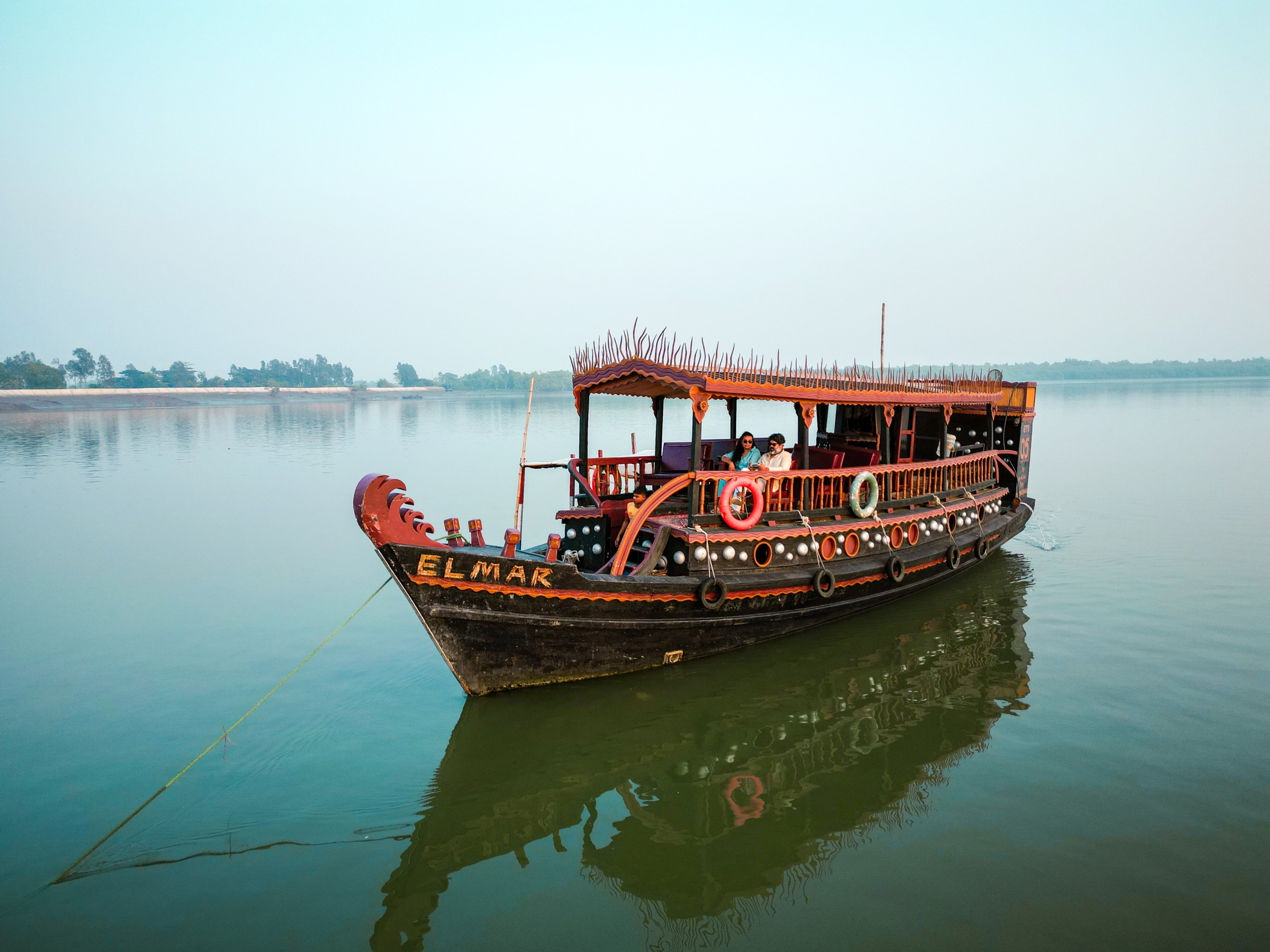
Some operators own their boats, others book space on whatever is free that week. Ask for the boat’s name. Tour De Sundarbans runs four of its own: Elmar, Para Siempre, Clandestino and Mangrove Mataal.
Facilities worth asking about
A washroom on board is the big one, especially for families and older travellers. After that, look for a working kitchen, a covered lower deck where you can rest out of the sun, and an open upper deck for viewing. Our boats have all four.
Group size on the boat
A boat carrying twenty behaves differently from one carrying eight. Ask the maximum for your date. Our scheduled groups can reach 20 people, and private departures can be arranged on request.
3. Who is the guide, and are the permits included for everyone?
A guide isn’t optional
Inside the reserve you move with a guide. It’s a practical rule as much as a regulatory one, since, as one travel guide puts it, the waterways look so alike that you wouldn’t notice your boat circling the same place without an experienced guide. Ask whether the guide travels with you all day or joins only at the reserve entry.
Permits for Indian and non-Indian guests
Every tourist needs a valid permit, and the Department of Sundarban Affairs lists entering the reserve without one among its don’ts, along with staying inside beyond sunrise to sunset hours. Our packages include forest permits and permissions for Indian guests. Non-Indian passport holders pay the forest permit fees separately, and their permits need lead time.
Where the paperwork happens
On our day tour, the boat stops at the Sajnekhali forest office to complete permits before entering the reserve. It’s a short stop, but it’s worth knowing the boat can’t go in until it’s done.
4. Which meals are counted?
“All meals included” is one of the most common lines in a package, and one of the least specific.
Check the first and last meal
On our 1 night 2 days tour, meals run from breakfast on day one to lunch on day two. Day two returns to Kolkata late in the evening, so plan for dinner on the way or at home. The 2 nights 3 days package covers all meals across all three days.
Where you eat on safari days
On a full safari day, lunch is served on the boat while cruising, with tea and snacks in the late afternoon. That’s the answer you want, because a boat that returns to shore for lunch loses the middle of the day.
Dietary needs and the no plastic rule
Meals on our tours are home cooked, with a vegetarian or non-vegetarian choice. Mention allergies when you book, not at the table. The reserve is also a no plastic zone, so leave carry bags and packaged snacks in polythene at home.
5. What time do you really get back to Kolkata?
This is the question people forget until they’re checking train times on the boat.
Return times across our packages
Package | Back in Kolkata |
1 day | 8:00 to 8:30 pm the same day |
1 night 2 days | 9:00 to 10:00 pm on day two |
2 nights 3 days | 3:00 to 3:30 pm on day three |
3 nights 4 days | Day four, confirmed when you book |
Build in a buffer
Traffic on the drive back is unpredictable, especially on weekends and festival days. On the 1 night 2 days trip, we ask guests not to book an onward train or flight before 11:00 pm on day two.
What does the price leave out?
Most package pages list what’s included and stay quiet about the rest. This is the list you should expect to see, whoever you book with.
What’s commonly outside the package price
Item | Why it’s excluded |
5% GST | Added on top of the package cost |
Forest permit fees for non-Indian passport holders | Set by the Tiger Reserve and charged per person |
Professional camera and video equipment fees | Charged on top of standard entry |
Single occupancy supplement | Packages are priced on twin sharing |
Personal expenses, tips and extra bottled drinks | Varies by guest |
Travel insurance | Arranged by you |
Group minimums
Group rates usually depend on a minimum number of guests. On our tours it’s 6 for the day trip, 5 for 1 night 2 days and 4 for 2 nights 3 days. Below that, you can still travel on the same date at the equivalent private trip cost.
6. What happens when the day doesn’t go to plan?
In a tidal forest governed by a tiger reserve, something on the itinerary will occasionally change. The question is who carries the cost.
Route changes and closures
Routes inside the reserve are set by the Tiger Reserve authority on the day and can change without notice. Watchtowers have also been closed to tourists on Tuesdays since 2023, so Tuesday departures on our day tour run a river and creek route instead.
Refunds
If we can’t form a group on your chosen date, you get a full refund. Delays caused by road traffic, vehicle breakdown or boat breakdown aren’t refundable. Read that clause on any booking before you pay.
The tiger question
No operator can promise a sighting, and none should. A clear answer tells you what the trip offers regardless: birds, crocodiles, deer, the tide itself. A vague one promises the tiger.
Putting it into one message
You don’t need a call. Paste this into a WhatsApp or email to any operator and compare the replies side by side.
The message
- How many full days does the boat spend inside the tiger reserve on this package?
- What is the boat’s name, and does it have a washroom and covered deck?
- Does the guide stay with us all day, and are permits included for every guest in our group?
- Which meal does the package start with and which does it end with?
- What time do we reach Kolkata on the last day?
- What happens to our booking if the route changes or the group doesn’t fill?
Reading the replies
Specific, fast answers with times and names are the good sign. Rounded promises and a quick push towards payment are the other kind.
Wrapping up
An itinerary is a sales document, and there’s nothing wrong with that. It’s just built to show you the watchtowers and the sunset, not the transfer hours, the meal gaps or the exclusions. Six direct questions fix that in a single message, and the replies will tell you as much about the operator as about the trip.
Our own answers are all above, and they’re the same ones you’ll get on the phone. For most first-time visitors, the 2 nights 3 days Sundarban tour is the one we recommend, while the 1 night 2 days trip suits people who can only spare a weekend, and the one day tour is honest about being one boat day and nothing more.
Send the six questions with your dates and group size, and we’ll reply with a straight answer to each.
FAQs
What should a Sundarban tour package include?
Road and river transfers from Kolkata, accommodation on twin sharing, meals for the stated days, at least one full day inside the tiger reserve, a guide and forest permits for Indian guests. Ask for exclusions in writing before paying.
Are forest permits included in Sundarban tour packages?
Usually for Indian guests. Non-Indian passport holders generally pay forest permit fees separately, at rates set by the Tiger Reserve, and their permits need extra lead time, so share passport details with the operator early.
How many hours of safari do you get on a 2 nights 3 days trip?
One full day inside the tiger reserve, usually from early morning until the light fades, visiting three watchtowers. The rest of the trip covers transfers, a country boat ride for birds, a village walk and folk evenings.
Is there a washroom on a Sundarban safari boat?
It depends on the operator. Tour De Sundarbans boats have a washroom, a working kitchen, a covered lower deck and an open upper deck. Always ask for the boat’s facilities, since you may spend eight hours or more on board.
Can a Sundarban tour be refunded if the route changes?
Route changes are decided by the Tiger Reserve authority and don’t usually trigger refunds. On our tours, you get a full refund if a group cannot be formed on your date, but delays from traffic or breakdowns aren’t refundable.
Are the Sundarban watchtowers open every day?
No. Watchtowers have been closed to tourists on Tuesdays since 2023, so Tuesday tours run river and creek routes instead. Routes on other days can also change at short notice on the reserve’s instruction.
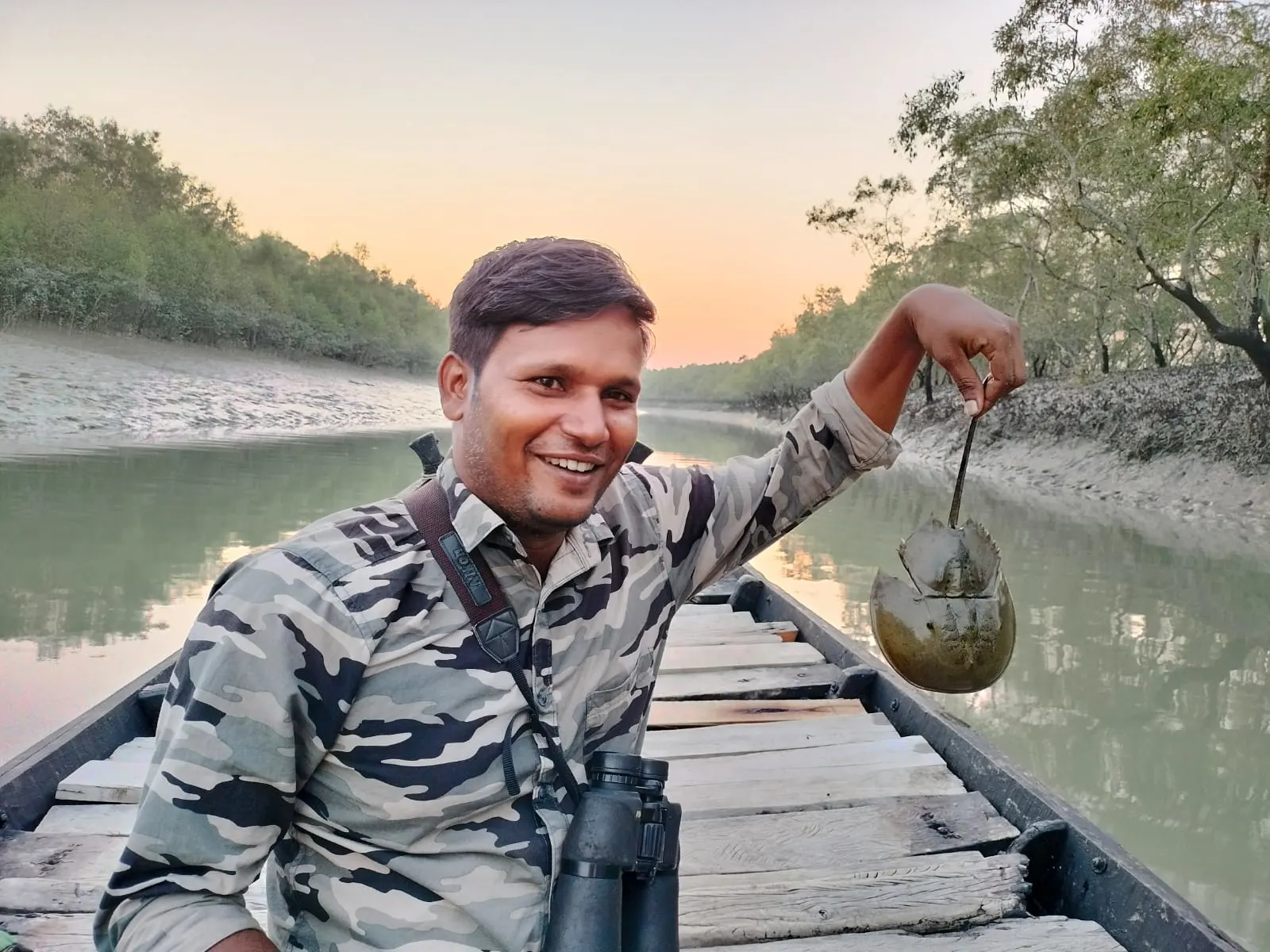
My name is Ajay Kumar shaw
Sundarban is my life line and tigers is what excites me.My aim is to track and document each one of them.